
© 2026 Resintel. All rights reserved. Supply/Demand data provided by and copyrighted by the American Chemistry Council.
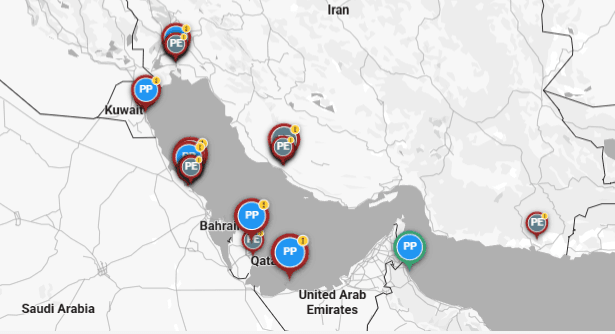
The Iran War has caused significant damage to infrastructure and caused production and shipping disruptions which have begun to reverberate throughout the international petrochemical supply chain. The longer the disruptions continue, the larger the deficit will accumulate and impact is more than linear.
The impact is already severe for Polyethylene and Polypropylene because the war has hit the chain at every level: crude, gas, LNG, export terminals, refineries, crackers, and petrochemical logistics. The Strait of Hormuz has been effectively shut or nearly shut for much of the period, and roughly one-fifth of global oil and LNG flows normally transit that route.
Included below is an extensive list of publicly reported, known disruptions as of March 24, 2026. Info is separated confirmed damage / shutdowns / force majeure / run cuts from threatened or precautionary actions to distinguish hard outages from elevated risk.
Supply chain prices have already rallied significantly as illustrated in the following charts.


Near the end of this report, tables neatly summarize the notable issues by sector.
1) What matters most for PE and PP right now
For Polyethylene, the biggest immediate risks are steam-cracker run cuts and shutdowns, because Ethylene availability is being hit directly by naphtha shortages in Asia and by upstream gas/LNG damage in the Gulf. For Polypropylene, the pressure is broader: Propylene supply is being constrained by reduced refinery throughput, FCC stress, and cracker curtailments; there are many confirmed cracker/refinery disruptions and Propylene force majeures.
There have been direct hits or shutdowns at Qatar’s Ras Laffan complex, Saudi and Kuwaiti refining assets, UAE gas facilities, Bahrain’s refinery, Iraq’s oil system, and a long list of Asian refining and petrochemical assets that are cutting runs or declaring force majeure because feedstock can no longer move reliably.
2) Confirmed direct disruptions in the Middle East: upstream, LNG, refining, export infrastructure
Qatar
Qatar is one of the most consequential direct hits. Iranian attacks damaged Ras Laffan LNG facilities, and QatarEnergy’s CEO said two of Qatar’s 14 LNG trains plus one GTL(Gas to Liquids) facility were damaged, sidelining 12.8 million metric tons per year of LNG capacity, or about 17% of Qatar’s LNG export capacity, with repair timelines reportedly of three to five years for the LNG trains and up to a year for the GTL unit.
QatarEnergy also said it had to declare force majeure on affected long-term LNG contracts. Shell’s Pearl GTL plant at Ras Laffan was also damaged and halted. Qatar had reportedly already fully shut LNG production earlier in the crisis, with the outage threatening a fifth of global LNG supply if prolonged.
United Arab Emirates
The UAE has suffered both upstream and midstream disruption. Operations were reportedly suspended at the Shah gas field, which supplies at least 500 million cubic feet per day to the domestic grid, after an attack. A temporary shutdown at the Habshan gas processing complex, one of the world’s largest at 6.1 bscfd capacity, after missile-debris incidents; ADNOC Gas later said Habshan had returned to operation, though the company also made temporary adjustments to LNG and export-traded liquids output because of shipping disruption in Hormuz.
On the oil side, the Bab oil field was targeted, UAE oil output had more than halved, the Ruwais refinery had been shut at one point, and Fujairah, normally the UAE’s critical outlet outside Hormuz, saw repeated attacks, partial loading halts, and reduced operating capacity. Fujairah normally handles more than 1 million bpd of Murban crude.
For PE and PP, the UAE disruptions are important because they hit both gas-processing and export optionality in one of the region’s key hydrocarbon systems. That tightens feedstock and utility reliability across Gulf petrochemicals and removes one of the main non-Hormuz escape valves.
Saudi Arabia
A drone reportedly struck the SAMREF refinery in Yanbu, damage was under assessment, and a missile aimed at Yanbu was intercepted. Saudi Arabia cut output by about 2 million bpd to roughly 8 million bpd, suspended operations at the 550,000-bpd Ras Tanura refinery, and rerouted some crude exports to the Red Sea. Yanbu loadings were briefly halted as well.
Saudi Arabia’s direct significance to PE and PP is obvious: this is a core supplier of crude, condensate, naphtha, LPG, and petrochemical feedstock into Asia and beyond. The combination of production cuts, refinery suspension, and export rerouting tightens both aromatics/naphtha availability and Propylene -linked refinery output.
Kuwait
Drone attacks reportedly hit operational units at Mina al-Ahmadi and Mina Abdullah refineries, causing fires at both sites. Kuwait had already cut oil output and declared force majeure, though the exact volume of the production cut was not specified.
This is another direct hit to refinery-derived feedstocks and product balances. For PP especially, refinery throughput stress matters because it tightens refinery-grade Propylene and disrupts the broader Propylene pool even before any PDH-specific problems are counted.
Bahrain
Bahrain’s Bapco declared force majeure after an attack on its 380,000-bpd Sitra refinery. The refinery takes Saudi crude via pipeline and is a major exporter of diesel, jet fuel, and naphtha into the Middle East and Asia.
Sitra matters to the polymer chain because it is another naphtha-producing refining center now impaired, adding to the feedstock squeeze for crackers that are already short of Middle East barrels.
Iraq
Iraq has moved beyond isolated disruption into a systemic export and production problem. Iraq reportedly declared force majeure on foreign-operated oilfields after Hormuz disruption halted most crude exports; Basra Oil Company output was cut to 900,000 bpd from 3.3 million bpd because southern exports were halted and barrels were being diverted to domestic refineries. Iraq’s southern oilfield output has reportedly fallen by about 70%.
While Iraq is not the first name people think of for PE and PP, its crude loss tightens the entire regional refinery and feedstock matrix. Every lost Iraqi barrel increases competition for alternative crude and worsens downstream naphtha availability into Asia.
Iran
Israeli strikes hit South Pars and the Asaluyeh processing hub. South Pars is the world’s largest offshore gas field and accounts for roughly 70%–75% of Iran’s gas production; Iranian media said the attacks targeted petrochemical facilities in South Pars and that the damage extent was initially unclear. Iran then halted gas flows to Iraq and diverted gas for domestic use.
For PE and PP, the Iran strike matters because South Pars/Asaluyeh is not just a gas source; it is central to the Iranian petrochemical and utility chain. Even without a clean public list of named Iranian PE/PP plant outages, the strike on South Pars/Asaluyeh clearly raises the risk of downstream curtailments across Iran’s petrochemical system.
3) Confirmed refinery, cracker, and petrochemical disruptions outside the Gulf that directly hit PE/PP supply
China
Sinochem reportedly cut crude throughput at its 300,000-bpd Quanzhou refinery to about 60%, and cut its 1 million tpy steam cracker to about 60% from roughly 85%. Sinopec planned to reduce March throughput by more than 10%, equal to roughly 600,000–700,000 bpd versus plan.
Wanhua Chemical declared force majeure to Middle East customers; its two crackers, totaling 2.2 million tpy Ethylene capacity, were still running at high rates at the time of reporting. CNOOC/Shell Petrochemicals (CSPC) planned to shut one 1.2 million tpy cracker in Huizhou, one of two crackers there totaling 2.2 million tpy, because of feedstock disruption. Zhejiang Petrochemical shut a 200,000-bpd crude unit by bringing forward maintenance, and Fujian Refining and Petrochemical (FREP) shut its smallest 80,000-bpd crude unit.
Those are major blows to Chinese Ethylene and Propylene chains. They directly threaten domestic PE supply and indirectly tighten PP by cutting refinery and cracker Propylene .
South Korea
Yeochun NCC reportedly cut output and declared force majeure because it could not receive naphtha due to the Hormuz blockade. LG Chem temporarily shut its No. 2 naphtha cracker at Yeosu, an 800,000 tpy unit, because of naphtha supply disruption. South Korea’s government also moved to limit naphtha exports and designate naphtha as a supply-chain security item.
This is directly negative for available Ethylene and Propylene supply in Northeast Asia and therefore bullish for PE and PP pricing. South Korea is too important in export polymers for these not to matter.
Japan
Japanese refineries cut utilization to 69.1% in the week to March 14, from 77.6% a week earlier and more than 80% before the conflict. Mitsui Chemicals began cutting Ethylene production at Osaka and Chiba. Mitsubishi Chemical started cutting Ethylene production at Ibaraki. Two Japanese buyers, Maruzen Petrochemical and Mitsui Chemicals, canceled naphtha import tenders.
For PE, these are direct Ethylene-chain cuts. For PP, they tighten cracker co-product Propylene and reinforce the shortage psychology across Asia.
Taiwan
Formosa Petrochemical issued force majeure on some petrochemical supplies; its No. 2 and No. 3 crackers at Mailiao were running at about 70%, with a warning that one cracker could be shut if naphtha did not arrive. Those two crackers together can produce up to 1.335 million tpy of Ethylene, while No. 1 was already not operating. The refinery was processing around 490,000 bpd at the time, with deliveries expected to be affected after March 20.
That is a major direct PE threat and a meaningful PP threat because Formosa is an important integrated regional producer.
Singapore
Aster Chemicals and Energy declared force majeure, with affected products including Ethylene and Propylene, and said its 1.1 million tpy cracker was running at about 50%. PCS declared force majeure on shipments. On the refining side, Singapore Refining Co. cut refinery runs at its 290,000-bpd Jurong site to about 60%, while ExxonMobil’s 592,000-bpd Jurong site cut crude runs to around 50% or lower from over 80%.
This is one of the clearest direct hits to the PE/PP precursor chain because the market explicitly lost both Ethylene and Propylene supply from a key regional hub.
Malaysia
Prefchem, the Pengerang refining JV between Petronas and Saudi Aramco, shut its 300,000-bpd crude unit because of crude-feedstock shortages. More than 70% of its seaborne crude imports last year came via Hormuz.
The importance here is less direct PE/PP resin outage and more feedstock tightening across Southeast Asia’s integrated refining-petrochemical chain.
Thailand
Rayong Olefins, a Siam Cement Group unit, declared force majeure due to the Middle East conflict. The exact products were not specified, but Rayong Olefins is an olefins chain asset, so the implication is direct pressure on Ethylene/Propylene balances.
Indonesia
Chandra Asri declared force majeure on all contracts because of raw-material supply disruption. Chandra Asri was one of the first Asian petrochemical makers to declare force majeure when naphtha flows began to tighten.
India
Mangalore Refinery and Petrochemicals (MRPL) shut a crude unit and some secondary units at its 300,000-bpd refinery because of oil shortage. Consequently, India had urged energy conservation and was seeking ways to preserve supply.
Vietnam
Binh Son Refining and Petrochemical asked the government to prioritize domestic crude to the Dung Quat refinery and limit crude exports through at least the end of the third quarter to protect national security. That is not a plant outage, but it is a clear sign of feedstock stress severe enough to trigger national intervention.
4) Shipping terminals, export routes, and maritime disruptions
This war is not only damaging assets; it is breaking logistics. Shipping through the Strait of Hormuz has nearly stopped since Feb 28, more than a dozen ships have been struck, marine insurers are canceling war-risk cover, and some vessels are struggling to refuel at Asian ports because bunker costs have surged.
The Fujairah terminal in the UAE has had repeated attacks and partial loading interruptions, while Saudi Arabia’s Yanbu has become its only crude export outlet and even there loadings were briefly halted after a missile threat. The region’s daily oil exports were down at least 60% from pre-war levels.
For PE and PP, these shipping disruptions matter as much as plant outages. A cracker can keep running for a short time, but if naphtha, propane, condensate, additives, catalysts, or export vessels cannot move, the effective supply loss becomes much larger than the nameplate outage list suggests.
5) Threatened/evacuated petrochemical sites with elevated risk, but not clearly confirmed as damaged in the reporting I reviewed
After the strikes on South Pars and Asaluyeh, Iranian media and officials issued evacuation warnings for Saudi Arabia’s Jubail Petrochemical Complex, the UAE’s Al Hosn gas field, and Qatar’s Mesaieed Petrochemical Complex, Mesaieed Holding, and Ras Laffan refinery.
Ras Laffan installations were being evacuated, sites were clearly named as threatened, but not all were clearly confirmed as physically damaged in the same way Ras Laffan LNG, Sitra, Shah, SAMREF, Mina al-Ahmadi, Mina Abdullah, or Habshan were.
That distinction matters because some of the largest polymer-chain risks may still be ahead if attacks spread from refineries and gas systems into the Gulf’s major dedicated petrochemical hubs.
6) What is directly confirmed for Polyethylene versus Polypropylene
For PE, the strongest confirmed disruptions are the cracker cuts and shutdowns: LG Chem Yeosu 800 ktpa cracker shut; Formosa’s Mailiao crackers at 70%; Mitsui and Mitsubishi cutting Ethylene; Sinochem’s cracker at 60%; Aster’s cracker at 50%; CSPC’s 1.2 mtpa cracker planned shut; Yeochun NCC force majeure; Rayong Olefins force majeure; Chandra Asri force majeure. These are the clearest direct hits to Ethylene and therefore Polyethylene.
For PP, the evidence is strong but more distributed. Force majeure or disruptions reportedly affecting Propylene at Aster and Formosa, while refinery cuts in China, Singapore, Malaysia, India, Saudi Arabia, Kuwait, Bahrain, Iraq, and the UAE clearly tighten Propylene generation from refining and integrated petrochemical systems. The PP threat today is best described as a combination of Propylene feedstock tightening, refinery/FCC disruption, and integrated cracker constraints, rather than a clean stack of named PDH outages.
7) Bottom line
The most important conclusion is that this is no longer a “Middle East crude” story. It is a full-chain petrochemical disruption. The Gulf has suffered confirmed hits to LNG, gas processing, refineries, fields, terminals, and export routes. Asia has responded with a widening cascade of refinery cuts, cracker cuts, force majeure notices, and supply rationing. The strongest direct, named pressure is on the Ethylene / PE chain, but the Propylene / PP chain is also clearly tightening through refinery and integrated petrochemical disruption even where plant-by-plant PDH data is still thinner in public reporting.
A.Upstream crude, gas, LNG, NGL, LPG, fields and terminals
B. Refineries and integrated refinery-petrochemical systems
C. Steam crackers, olefins, Propylene and petrochemical intermediates
D. Polyethylene / Polypropylene polymerization and resin-specific impacts
E. Elevated-risk sites named in public reporting, but not clearly confirmed as damaged in the reviewed coverage
Fast takeaways for resin markets
The clearest confirmed direct hits to PE are in the steam-cracker chain: LG Chem Yeosu, Sinochem Quanzhou, Formosa Mailiao, Aster Singapore, CSPC Huizhou planning, Mitsui Chemicals, Mitsubishi Chemical, and Yeochun NCC. Those directly reduce Ethylene availability and therefore tighten Polyethylene supply.
For PP, the chain is also tightening, but the public record is more concentrated in refinery run cuts, integrated cracker cuts, and explicit Propylene force majeure rather than a neat, publicly documented set of war-driven PDH shutdowns. The strongest confirmed PP signals are Aster’s explicit impact on Propylene, broad refinery outages in the Gulf and Asia, and lower integrated cracker rates across Northeast and Southeast Asia.
The biggest system-wide support factor remains Hormuz disruption plus Gulf refinery damage. Once crude, naphtha, LPG, and shipping all tighten at the same time, the physical impact on PE and PP becomes larger than any single unit outage list suggests.